
















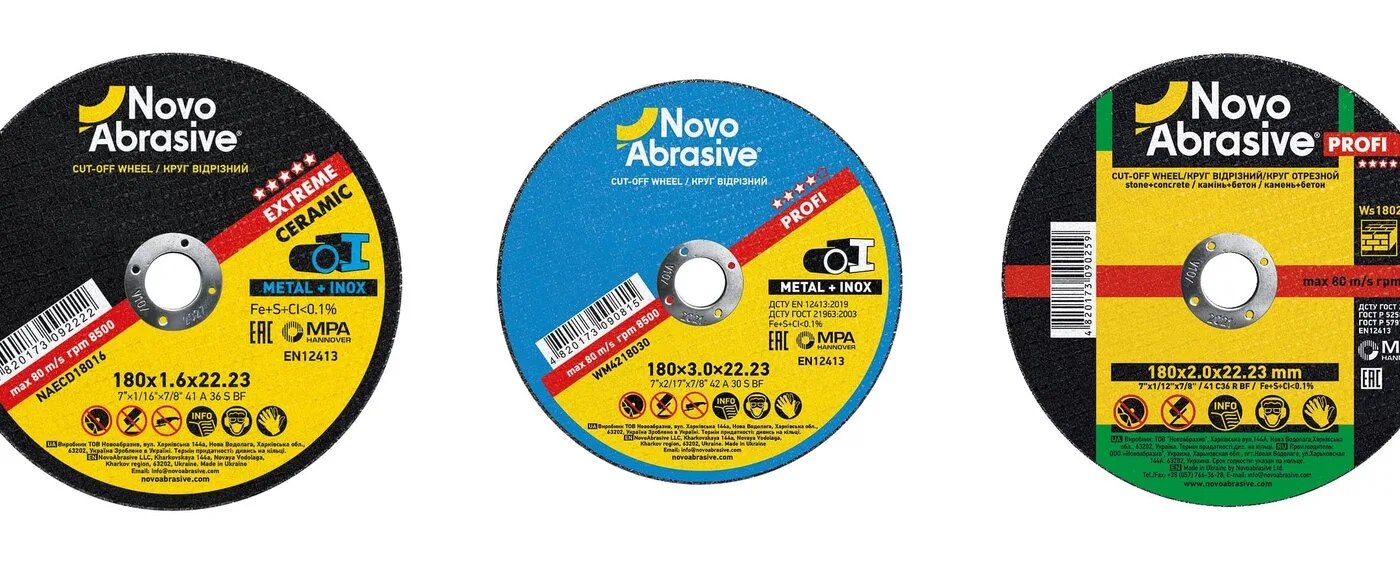
125 mm is the most common size and 230 mm the largest on construction sites. The 180 mm disc sits between them and is often overlooked. Wrongly so: this is the diameter for grinders of about 2 000 W where a 125 mm disc lacks cutting depth and a 230 mm disc is too heavy and unsafe for precise work.
Where exactly 180 mm makes sense
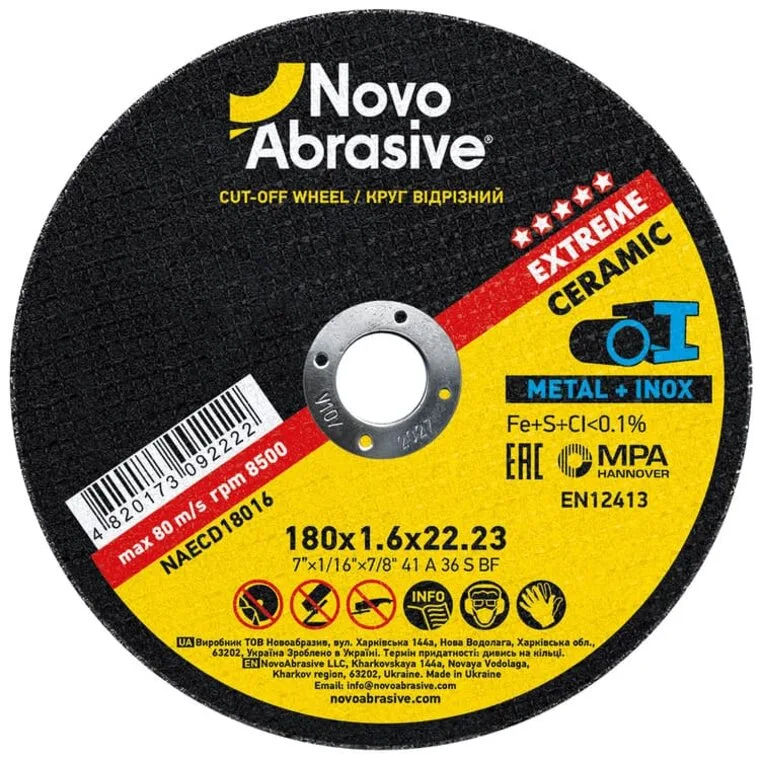
A 180 mm cutting disc is the intermediate diameter between 125 and 230 mm with a cutting depth of about 40–45 mm on a new disc (the exact value depends on the flanges and guard of the grinder). You take it when:
- a pipe or profile does not go through a 125 mm disc in one or two cuts — pipes up to 80 mm, channel, angle, square tube 60–80 mm;
- many long cuts are needed— rebar cages, steel structures, demolition: a 180 mm disc lasts noticeably longer than a 125 mm one;
- 230 mm is overkill: a heavy grinder tires you out, precision drops and a 65–70 mm depth is not needed;
- you have a 180 mm grinder— usually about 2 000 W, lighter and more manoeuvrable than a 230 mm one.
Thickness table: what to cut with which
| Thickness | Purpose | Features |
|---|---|---|
| 1.6 mm | Thin-walled pipes, profile, sheet, stainless steel | The fastest and coolest cut, minimal burr; does not tolerate misalignment |
| 2.0 mm | Universal: pipes, angle, rebar up to 12 mm | Balance of speed and resource |
| 2.5 mm | Heavy profile, rebar from 16 mm, channel | More resistant to side load on long cuts |
| 3.0 mm | Heavy workpieces, solid bar, demolition | Maximum life; more heat in the cut |
| 4.0 mm | Rough cutting, castings, rails | Only for rough work; not for stainless steel |
The general rule for any diameter: a thinner disc cuts faster and more precisely, a thicker one lasts longer. The full selection logic is in the guide "Cutting disc thickness".
Type 41 or 42
- Type 41 — flat disc. The standard for most jobs: the cut is straight and the disc is easy to guide along the line.
- Type 42 — depressed centre. The clamping nut is "sunk" into the disc, so you can cut flush with a surface (trim a bolt or a seam level) and work in corners where the nut of a flat disc would catch the workpiece. In the NovoAbrasive 180 mm range type 42 comes in 2.0, 2.5 and 3.0 mm.
180 mm disc for stone
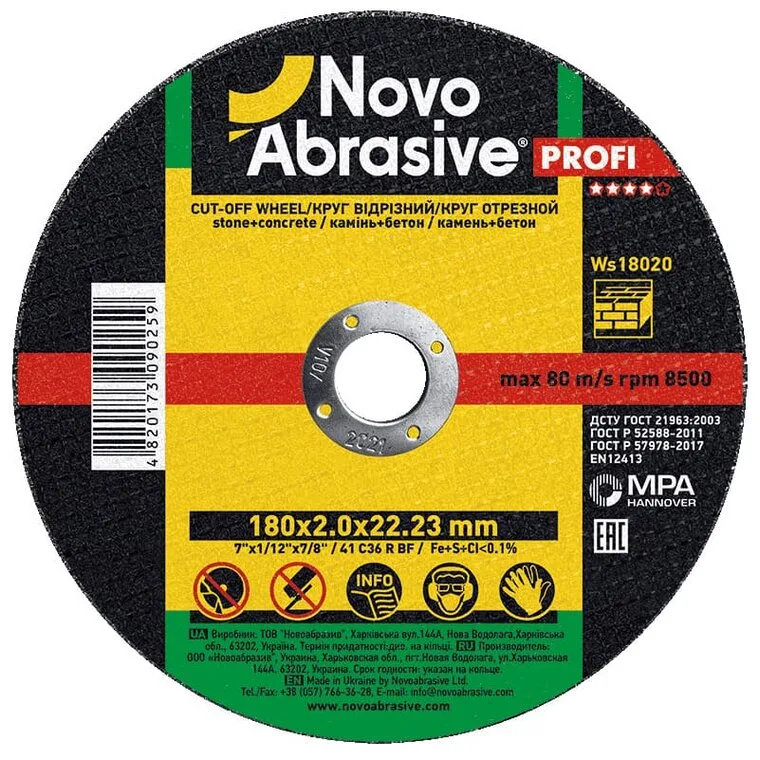
A metal disc and a stone disc differ in the grain. For metal aluminium oxide (A) or ceramic grain works, for stone — silicon carbide (C): it is harder and more brittle, so it self-sharpens on concrete, brick, aerated block and paving slabs. In the 180 mm size NovoAbrasive makes stone discs in 2.0, 2.5 and 3.0 mm. They must not be used to cut metal, nor a metal disc on stone: the grain glazes over, the disc heats up and wears out quickly. When a diamond blade is better than an abrasive disc — in the guide "Cutting concrete and stone: diamond or abrasive".
Speed, grinders and safety
- Maximum 8 600 rpm— that is 80 m/s at the edge of a 180 mm disc. Exactly what a standard 180 mm grinder delivers.
- On a 230 mm grinder a 180 mm disc is allowed speed-wise (about 6 600 rpm), if the guard and flanges match — but the cutting depth will be smaller.
- On a 125 mm grinder — forbidden: its 11 000–12 000 rpm exceed the allowed 8 600, and the guard does not cover the disc.
- A 230 mm disc on a 180 mm grinder — forbidden: 8 600 rpm exceeds the 6 600 allowed for 230 mm.
- Cut with the edge only, no side pressure; guard, goggles or shield, gloves — mandatory.
The speed table for all diameters is in the guide "Recommended speeds (RPM)", the rules in the angle grinder safety guide.
NovoAbrasive 180 mm series
| Series | Grain | 180 mm thicknesses | Purpose |
|---|---|---|---|
| Extreme | Ceramic aluminium oxide, Metal + Inox | 1.6 mm | Stainless steel, intensive cutting in the shop |
| Profi (NOVOABRASIVE 41 / 42) | Aluminium oxide | 1.6 / 2.0 / 2.5 / 3.0 / 4.0 mm | Daily professional work, type 42 in 2.0–3.0 mm |
| Standard | Aluminium oxide | 1.6 / 2.0 / 2.5 / 3.0 mm | Household and occasional jobs |
| Hetman | Aluminium oxide | 1.6 / 2.0 / 2.5 mm | Factory brand at Standard level |
| WellCut | Aluminium oxide | 1.6 / 2.0 mm | Factory brand at Profi level |
| For stone | Silicon carbide | 2.0 / 2.5 / 3.0 mm | Concrete, brick, stone |
The 180 mm range has 24 models in total. All discs are fibreglass-reinforced, made to EN 12413 and certified by MPA Hannover.
Frequently asked questions
Can a 180 mm disc be fitted on a 230 mm grinder?
Yes, if the guard and flanges match it: the speed of a 230 mm grinder (about 6 600 rpm) is below the allowed 8 600. But the cutting depth drops to that of a 180 mm disc, so it only makes sense when no other disc is available.
Can a 180 mm disc go on a 125 mm grinder?
No. A 125 mm grinder delivers 11 000–12 000 rpm — that exceeds the 8 600 allowed for a 180 mm disc, and the guard does not cover the disc. This is a direct breach of safety rules.
Which 180 mm disc thickness for rebar?
For rebar up to 12 mm — 1.6–2.0 mm, for 16 mm and thicker — 2.5 mm. A thicker disc holds side load better when the bar pinches in the cut.
What is the cutting depth of a 180 mm disc?
About 40–45 mm with a new disc — depending on the flange diameter and the guard of the grinder. The depth decreases as the disc wears, so for pipes over 80 mm take a 230 mm disc.
How does a 180 mm stone disc differ from a metal disc?
By the grain: for stone — silicon carbide (C), for metal — aluminium oxide (A) or ceramic grain. A stone disc cuts concrete, brick and tile but not metal; a metal disc glazes over on stone, heats up and wears out quickly.
NovoAbrasive 180 mm cutting discs
24 models: for metal 1.6–4.0 mm in types 41 and 42, for stone 2.0–3.0 mm. EN 12413, MPA Hannover. Wholesale prices from the manufacturer.
All 180 mm cutting discs