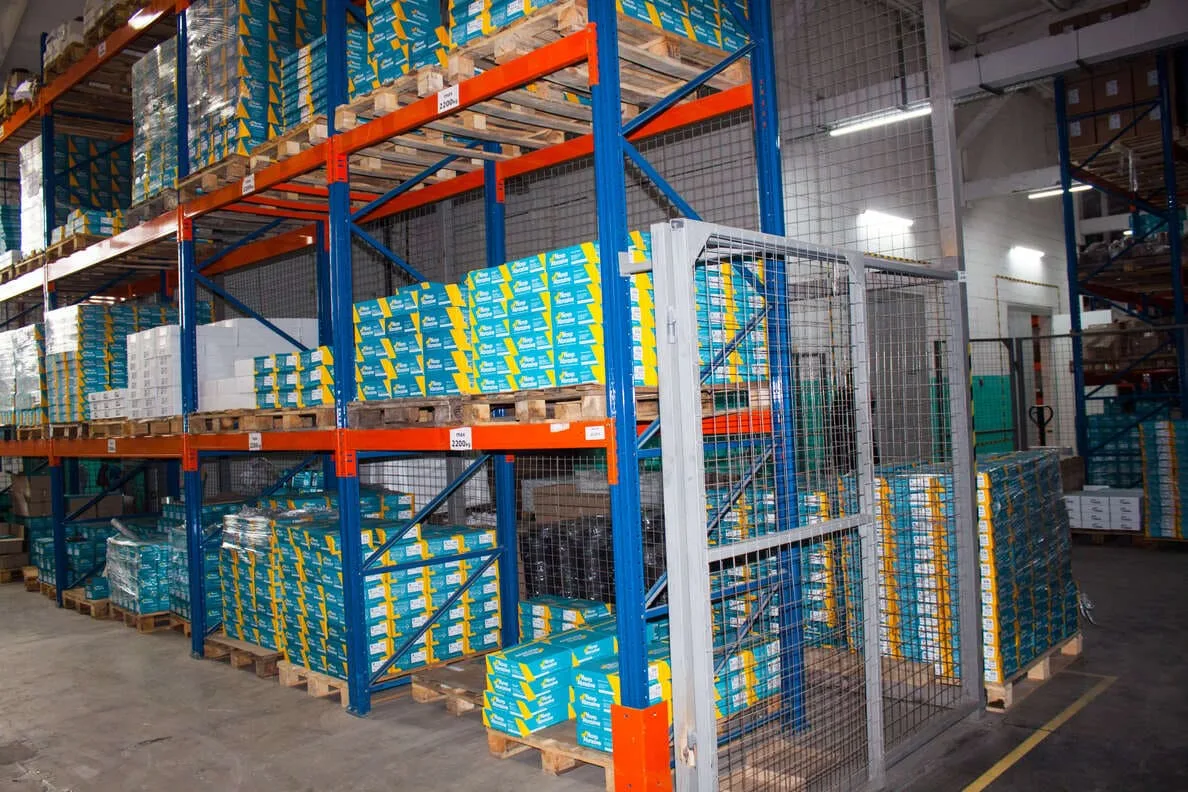
Storage conditions
Abrasive discs are precision tools that are sensitive to environmental conditions. Improper storage reduces bond strength and can make the disc unsafe to use. Here are the optimal storage parameters according to FEPA recommendations:
| Parameter | Optimal | Acceptable | Unacceptable |
|---|---|---|---|
| Temperature | 18-22°C | 15-25°C | Below 5°C or above 35°C |
| Humidity | 45-65% | 40-70% | Above 80% or condensation |
| Ventilation | Moderate natural | Closed dry room | Drafts, open air flow |
Correct position
Abrasive discs should always be stored horizontally (flat) on a flat, hard surface. Basic rules:
- Horizontally on a flat surface - in stacks, on a pallet or rack
- Never on an edge - vertical storage causes deformation and microcracks
- Do not hang by the mounting hole - this leads to imbalance and vibration during operation
- The stack height is no more than 20-25 cm for thin cutting discs so that the lower discs do not deform under the weight.
- Underlayment - place flat plywood or cardboard under the stack to avoid contact with the concrete floor (concrete gives off moisture)
What to protect against
In addition to temperature and humidity, abrasive discs need to be protected from several factors:
- Direct sunlight - UV radiation accelerates the aging of the Bakelite bond. Store indoors or in the original packaging.
- Temperature changes - sudden fluctuations (for example, an unheated warehouse in winter) cause moisture condensation inside the disc structure
- Chemicals - solvents, acids, alkalis, lubricants destroy the bond. Store separately from chemicals.
- Mechanical shocks - drops, impacts, overhead loads cause microcracks, invisible to the eye, but critical at 12,000+ rpm
- Water and condensation - even brief contact with water reduces durability. Do not store on basement floors or near water pipes.
Expiration dates (FEPA)
The shelf life of an abrasive disc depends on the type of bond. After the expiration date, the disc must not be used, even if it appears undamaged.
| Connection type | Expiration date | Typical products | Why limited |
|---|---|---|---|
| Bakelitova (BF) | 3 years | Cutting and grinding discs | Resin absorbs moisture, loses strength |
| Vulcanite | 5 years | Thin cutting discs, polishing | Rubber gradually hardens, becomes brittle |
| Ceramic (V) | 10 years | Grinding discs for machine tools | Ceramic bond is the most durable, but mechanical risks remain |
The date of manufacture and expiry date are indicated on the label of each disc. NovoAbrasive products are marked with the date in the format month/year of manufacture and month/year of expiry.
Checklist before use
Before each installation of a disc on a grinder, perform three mandatory checks:
- Visual inspection - check the disc for cracks, chips, dents, discoloration. Inspect both sides and the end. Any damage = scrap.
- Ring Test (sound test) - hang the disc by the bore on a pencil or wire. Tap lightly with a wooden handle (not metal!). A good disc gives a clear ringing sound. A dull or rattling sound indicates an internal crack.
- Check the date - read the expiration date on the label. Do not use an expired disc. Not even one month after the date.
- Check RPM - the maximum speed on the disc should be no less than the revolutions of your grinder. This is indicated both on the disc and in the tool's passport.
- Suitability for the task - cutting disc for cutting only, grinding disc for grinding only. Never use for purposes other than intended.
What to do with damaged discs
Rule one: a damaged or expired tire cannot be used. Never.
- Cracks, chips, deformation - the disc is for recycling. Do not try to "trim" or use "carefully"
- Expired - recycling, even if the disc looks perfect
- Failed Ring Test - Disposal without Discussion
- Unknown storage history - if you don't know how and where the disc was stored (for example, found in a garage) - don't risk it
For disposal: break the disc so that it cannot be used by anyone else and dispose of it as industrial waste. For more information on safety when working with abrasive tools, see our safety page.
Requirements for distributor warehouses
For companies that purchase abrasive wheels in bulk, proper storage organization is investment protection. One batch of wheels that has lost its properties due to improper storage can cost thousands of hryvnias in direct losses and even more in customer complaints.
Organization of warehouse space
- Separate area - abrasive wheels are stored separately from chemicals, oils and solvents. Organic solvent fumes destroy the Bakelite bond even without direct contact
- Shelving storage - metal or wooden shelving with flat shelves. Minimum height from the floor - 15 cm (protection from moisture of the concrete floor)
- Climate control— temperature 15-25°C, humidity 40-65%. In unheated rooms in winter, use dehumidifiers
- Sun protection - curtain windows or place shelves away from direct sunlight
- Cargo operations - when unloading pallets, do not allow boxes to fall. Even a single fall from a height of 50 cm can cause microcracks in several discs
Inventory rotation system (FIFO)
Be sure to follow the First In, First Out principle: the first batches received are shipped first. Label pallets with the date of receipt. This is critical for Bakelite wheels with a 3-year shelf life - stock that has been "stale" in the warehouse may be approaching its expiration date.
Goods receipt checklist
- Check the integrity of the packaging - damaged box = possible damage to the wheels
- Pay attention to traces of moisture or condensation on the packaging
- Check the production date - the remaining shelf life should be sufficient for sale
- Selectively inspect 2-3 wheels from the batch for cracks, chips or deformations
- Record the receipt date for the FIFO system
Frequently asked questions
What is the shelf life of a cutting disc?
Depends on the type of bond. Bakelite bond (most common for cutting and grinding discs) - 3 years from the date of manufacture. Vulcanite - 5 years. Ceramic (vitrified) - up to 10 years. The expiration date is indicated on the disc label.
At what temperature should abrasive discs be stored?
The optimum temperature is 18-22°C. The permissible range is 15-25°C. Avoid sudden changes in temperature: they cause moisture condensation, which destroys the Bakelite bond. An unheated garage or warehouse in winter is a bad place for storage.
How to perform the Ring Test correctly?
Hang the disc by the mounting hole on a pencil or thin wire - the disc should hang freely. Lightly tap the body of the disc with a wooden object (not metal!). A working disc will make a clear, ringing sound. A dull, rattling or cracking sound indicates an internal crack - such a disc should be disposed of.
Can abrasive discs be stored vertically?
No. Abrasive discs should be stored horizontally (flat) on a flat surface. Storing on the edge leads to deformation and the appearance of microcracks, invisible to the eye, but critically dangerous at 12,000+ rpm. Stacks - no more than 20-25 cm for thin cutting discs.
Need quality abrasives?
NovoAbrasive is the only Ukrainian manufacturer with MPA Hannover certification. Discs with a resource that are trusted in 35+ countries.