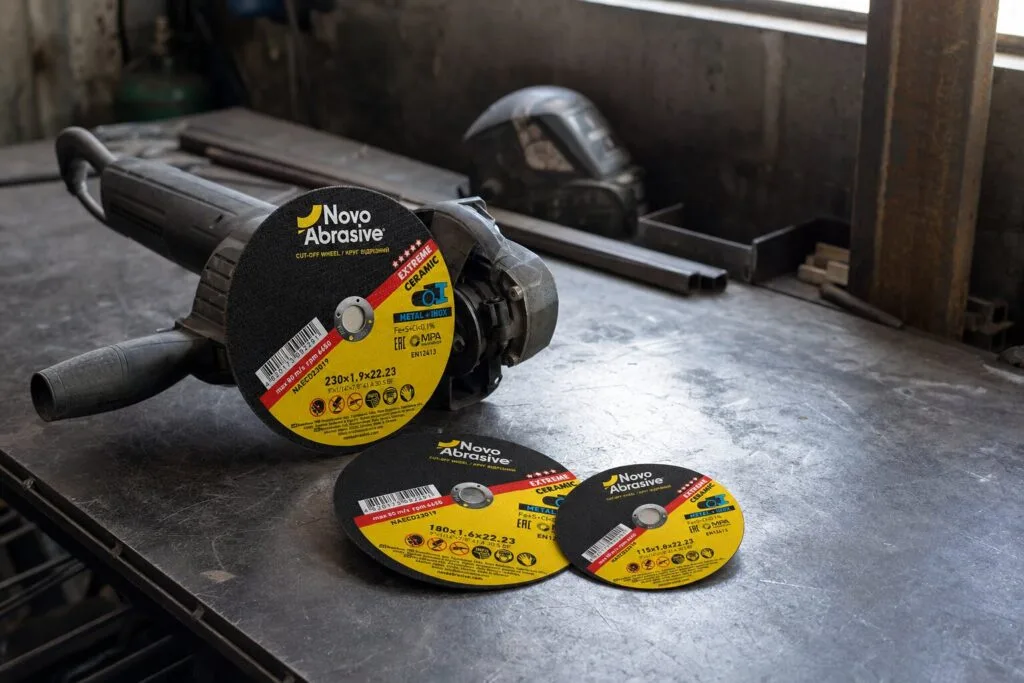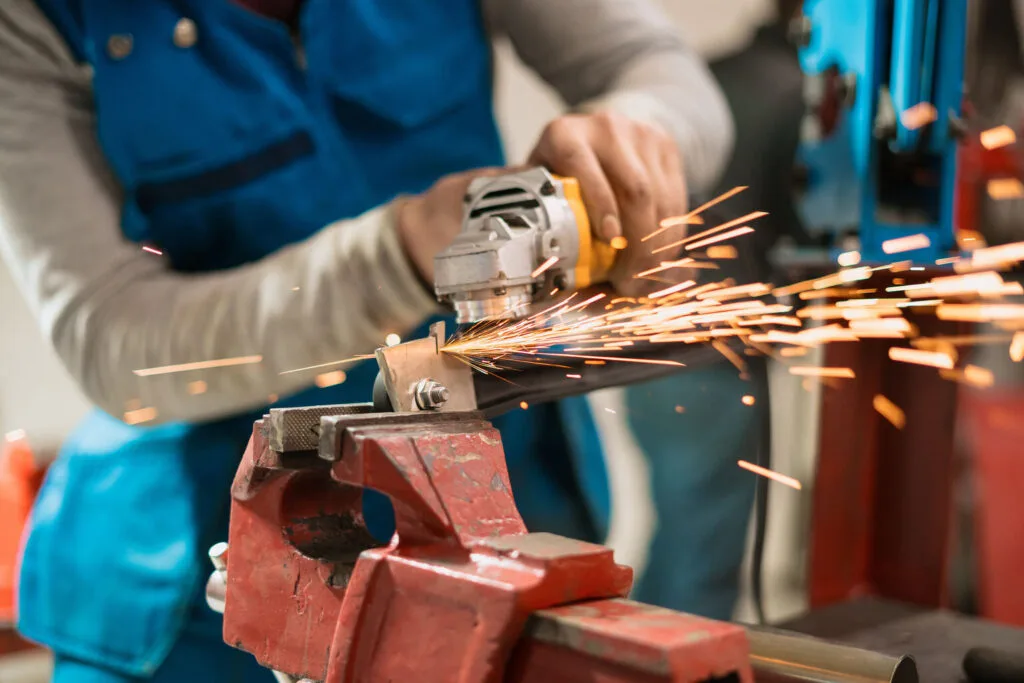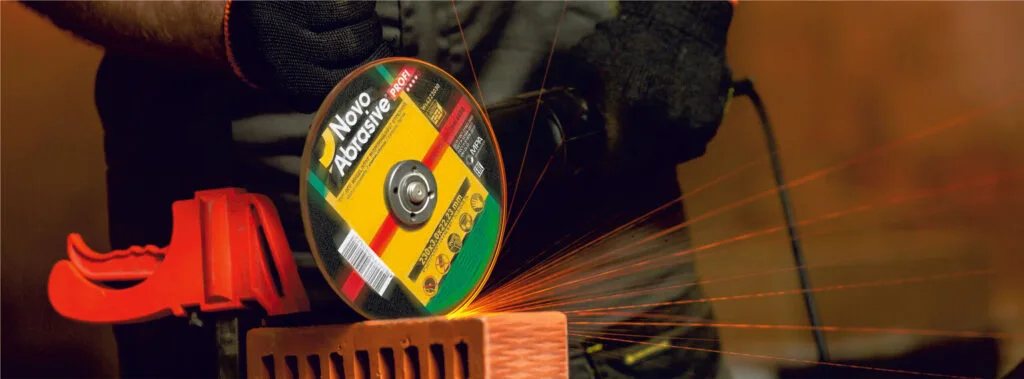
















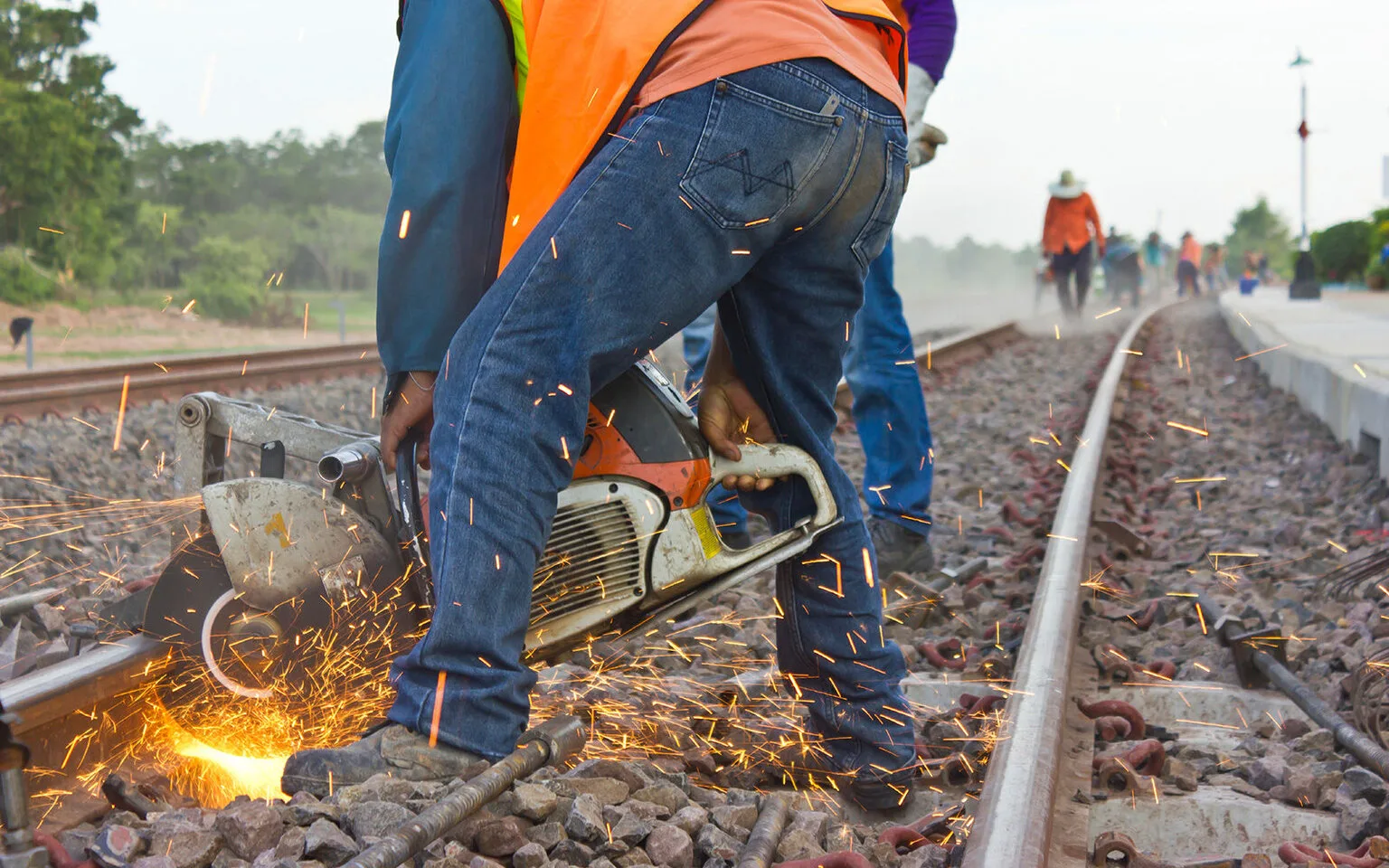
The grinder is the most traumatic hand tool in the workshop. Most injuries are caused by removing the cover, lack of PPE, and the wrong disc. We collect the rules for safe work with a grinder.
Why is the angle grinder dangerous - statistics
Angle grinders are consistently among the top three most traumatic hand-held power tools. The Cutting disc rotates at speeds up to 80 m/s — comparable to the speed of a bullet. When the disc breaks, the fragments fly away at the same speed. Most injuries occur due to violations of basic safety rules.
| Cause | Injury rate |
|---|---|
| Destruction of the disc | ~30% |
| Kickback | ~25% |
| Contact with the disc | ~20% |
| Sparks and fire | ~15% |
| Dust | ~10% |
Most injuries are preventable. Following the safety rules described in this manual will minimize the risk.
Personal protective equipment (PPE)
✓ Correct
- Safety glasses/shield, headphones, gloves.
- Respirator (especially stainless steel, stone).
- The casing is always; the disk is for its intended purpose and RPM.
- Idle start 30–60 s before operation.
✕ Error
- Removing the protective cover.
- Work without glasses/shield.
- A worn or cracked wheel.
- Cutting "on yourself", sparks towards the operator.
PPE is the first line of defense. Wear a full set every time, even if you only plan to make one cut.
Mandatory PPE
1. Safety glasses or face shield
- EN 166 standard, resistance marking F (low-energy impact) or B (medium-energy impact)
- Closed type (with side protection) or full face shield
- Should fit snugly, not fog up
2. Protective gloves
- Standard EN 388 (mechanical protection) + EN 407 (thermal protection)
- Leather or aramid fibre
- Without loose ends, threads, ties - anything that can pull you into a disc
3. Hearing protection
- The grinder generates 90-100 dB - this is the level of a jackhammer
- Earplugs reduce noise by 20-30 dB
- Headphones (noise-canceling) reduce noise by 25-35 dB
4. Respirator
- FFP2 - for working with metal (carbon steel, aluminum)
- FFP3 - for concrete, stone, stainless steel (quartz dust, Cr VI)
- Check the fit before each use.
5. Protective clothing
- Long sleeves made of natural fabric (cotton), not synthetics — synthetics melt from sparks
- Closed shoes with a protective toe cap (standard S1 or higher)
- Leather apron for intensive work - protection from sparks and hot debris
Prohibited clothing items
- ❌ Gloves with loose threads
- ❌ Scarves, ties, chains
- ❌ Long, loose hair
- ❌ Wide sleeves
- ❌ Synthetic clothing
Checking the tool before work
Take 2 minutes to check it - it could save your health and life. Before each use of the grinder, check:
1. Power cable
- Intact, without damage to insulation, kinks, or exposed wires
- The fork is free of cracks, the pins do not wobble.
2. Power button
- Works without sticking - pressed = works, released = stops
- The button lock is off - the grinder should not work without holding the button.
3. Protective cover
- Installed and securely fixed
- No cracks or damage
- Directed by the open part from the operator
4. Flanges and nut
- Flanges are clean, free of burrs and damage
- The nut is tightened, the wheel does not wobble on the spindle
5. Abrasive wheel
- No visible cracks, chips, deformations
- Expiration date has not expired (date on label)
- Maximum disc speed ≥ grinder revolutions
- Disc diameter ≤ maximum diameter for your grinder
6. Ring Test
- Hang the disc by the bore on a pencil or wire
- Lightly tap the body of the disc with a wooden object
- A clear, ringing sound = the disc is complete, you can use it
- Dull or rattling sound = crack, discard wheel
Correct wheel installation
An incorrectly installed wheel is a direct threat of destruction. Follow the 7-step sequence:
Step 1. Unplug the grinder. Remove the plug from the outlet. For cordless grinders, remove the battery.
Step 2. Unscrew the clamping nut with the special wrench included in the grinder kit. Secure the spindle with the locking button.
Step 3. Remove the old wheel. Clean the flanges from dust, abrasive residue and rust. The flanges should be smooth and clean.
Step 4. Install the new disc. Check the direction of rotation (the arrow on the disc should match the direction of rotation of the grinder). The disc should fit freely on the spindle - the mounting hole is 22.23 mm. NEVER use adapters to reduce the mounting hole.
Step 5. Tighten the clamping nut. Tighten moderately - overtightening will deform the flanges and create tension in the disc.
Step 6. Install the protective cover. Point the open part away from you.
Step 7. Turn on the grinder at idle for 30 seconds. Hold the tool to the side - the plane of the disc should not be directed at you or other people. Listen: a smooth sound without beating and vibrations = everything is normal.
Safe working area
A properly organized work area prevents most accidents. Before starting work, check:
Workpiece Clamping. Always secure the workpiece with vises, clamps, or other holding devices. NEVER hold the workpiece by hand—if the wheel kicks back or jams, the workpiece can be thrown out with great force.
Direction of sparks. Direct sparks away from yourself and others. Remove all combustible materials from the sparking area—paper, rags, solvents, paints, wood chips.
Bystanders. The minimum distance for bystanders is 3-5 meters. Everyone in the work area must wear safety glasses.
Stable position. Work on a flat, stable surface. Stand with both feet on the floor. Do not work on ladders, scaffolding, or unstable structures.
Lighting. The work area should be well lit. Shadows and poor visibility increase the risk of inaccurate cuts and contact with the wheel.
Ventilation. When working indoors, ensure adequate ventilation. Abrasive and metal dust in confined spaces is a serious respiratory hazard, even with a respirator.
Kickback - how to avoid it
Kickback is a sudden, sharp jerk of the grinder when the disc jams or pinches in the material. The grinder can escape from your hands and fly into the plane of rotation of the disc. Kickback is the cause of approximately 25% of all injuries when working with a grinder.
Causes of backlash
1. Jamming in the cut gap. Both parts of the workpiece squeeze the disc - the grinder is thrown back sharply. The most common reason is the incorrect location of the supports, when the cut part cannot move freely.
2. Cutting into a corner. When cutting into an inside corner of a workpiece, the wheel can get pinched by the walls. Cut from the corner outward, not inward.
3. Contact with a hidden object. Reinforcement in concrete, nails in wood, pipes in the wall - the disc stops suddenly, but the grinder does not.
4. Worn or damaged wheel. A wheel with cracks, irregularities or runout will operate unstable and is prone to binding.
How to prevent
Hold the grinder with both hands. Always use the side handle. One hand on the body, the other on the side handle. This gives you control during kickback.
Ensure that the kerf is SPREADING. Position the workpiece so that the cut-off part can freely fall down or to the side. Never allow the wheel to pinch.
Do not cut deeper than necessary. The deeper the wheel is immersed in the material, the greater the risk of jamming. For thick workpieces, make several passes.
Do not change the angle while cutting. Keep the wheel strictly in the plane of the cut. A lateral deviation of even a few degrees creates pinching and lateral stress.
Turn on BEFORE contact, turn off AFTER. Allow the wheel to reach full speed before contacting the material. After cutting, first remove the wheel, then turn it off.
Stand to the side of the plane of rotation of the disc. Never stand behind the grinder in the plane of the disc. When the disc kicks back, it will fly in this plane.
Disc Destruction - Causes and Prevention
The destruction of an abrasive wheel at a rotation speed of 70-80 m/s is one of the most dangerous emergency situations. The fragments fly with enormous force and can cause serious injuries even through clothing. The protective cover retains most of the fragments, but not all.
Causes of destruction
| Cause | How to prevent |
|---|---|
| Exceeding maximum speed | The maximum speed on the disc must be ≥ the speed of the grinder. Check before installation. |
| Side pressure on the Cutting disc | Use the Cutting disc only for cutting (90°). Use the Grinding disc for grinding. |
| Cracks (visible and hidden) | Visual inspection + Ring Test before each use |
| Expired expiration date | Check the date on the label. Bakelite bond - 3 years from production |
| Storage in a humid environment | Store horizontally, 18-22°C, humidity 45-65%. Out of direct sunlight |
| Incorrect installation | Clean flanges, moderate tightening, no adapters, correct direction |
| Overheating of the disc | Don't press down on the grinder. Take breaks when cutting in series. Alternate the discs. |
What to do when there are changes in the disc's operation
- Increased vibration→ stop work immediately, check the wheel and flanges
- Wheel runout→ replace the wheel, it is deformed or incorrectly installed
- Extraneous sounds (gnashing, rattling) → stop work, check the wheel, flanges, casing
- Burning smell→ wheel or motor overheating. Cool the tool. If the wheel smells, replace it.
Fire safety
Sparks from a grinder have a temperature of 1500-2000°C. They easily ignite paper, fabric, solvents, wood chips and other flammable materials. Spark fires are one of the most common accidents in production and workshops.
Before work
- Remove all flammable materials at least 5 meters from the work area.
- Cover anything that cannot be removed with non-combustible material (fireproof cloth, sheet metal)
- Keep a minimum 2 kg fire extinguisher on hand (powder or CO₂)
- Nearby is a bucket of water or sand for small fires.
During work
- Control the direction of the sparks - direct them to a safe surface (concrete floor, metal)
- Do not work near gas cylinders, hoses and connections.
- Containers containing flammable liquids - only thoroughly cleaned and ventilated. Vapors can explode from a spark
After work
- Inspect the work area for smoldering particles - they can ignite within an hour
- Do not leave the work area unattended for 30 minutes after finishing work.
- Collect metal shavings and scraps in a metal container with a lid.
Working with different materials — specific risks
Each material poses its own specific hazards. Knowing these risks will help you choose the right protection and tools.
Metal (carbon steel)
- Main risk: abundant sparking, spark temperature up to 2000°C
- PPE: standard set - EN 166 goggles, EN 388/407 gloves, FFP2 respirator
- Disc: marking A (aluminum oxide) - for steel and ferrous metals
- Thin sheet: use support under the workpiece to avoid vibration and deformation
Stainless steel (INOX)
- Main risk: grinding produces dust containing chromium VI (Cr VI) — a group I carcinogen
- PPE: FFP3 respirator mandatory, full face shield
- Wheel: ONLY wheels marked INOX (iron and sulfur free). A regular wheel contaminates stainless steel with iron, which leads to corrosion
- Important: do not mix wheels for regular steel and INOX - iron residues on the wheel will contaminate the stainless steel.
Concrete and stone
- Main risk: quartz dust causes silicosis, an incurable lung disease
- PPE: FFP3 respirator mandatory, closed-type safety glasses
- Disc: C marking (silicon carbide) or diamond cutting disc
- Wet cutting: water supply reduces dust generation by 90% - use when possible
Aluminum and non-ferrous metals
- Main risk: aluminum clogs the wheel, leading to overheating and knocking
- Wheel: special wheels with anti-clog marking or for non-ferrous metals
- Technique: Do not press — aluminum is soft and melts easily under excessive pressure
Wood
- Main risk: overtightening - wood is fibrous, the wheel can jam and cause kickback
- Fire risk: sawdust and small wood particles easily ignite from sparks or a heated wheel
- Disc: special Grinding discs for wood (P80 and above) or flap discs
- NEVER put a circular saw blade on a grinder - it is deadly dangerous.
First aid for injuries
Knowledge of first aid is critical when working with a grinder. The severity of injuries requires quick and correct action.
Cuts and lacerations
- Press a clean cloth onto the wound to stop the bleeding. Keep applying pressure.
- Do not pull the fragments out of the wound—this can increase bleeding. Secure them in place.
- Secure the bandage. Elevate the injured limb above the level of the heart.
- In case of pulsating (arterial) bleeding, apply a tourniquet above the wound and immediately call an ambulance (103).
- See a doctor—even shallow cuts from a grinder may require stitches and a tetanus shot.
Debris getting into the eyes
- Do not rub your eye—this can push the splinter deeper and scratch the cornea.
- Do not try to remove the splinter yourself, especially a metal one.
- Cover both eyes with a clean bandage (closing one eye does not stop the movement of the other).
- Contact an ophthalmologist immediately or call an ambulance.
- A metal fragment in the eye begins to rust within hours—every hour of delay worsens the prognosis.
Burns from sparks
- Cool the affected area with running water for 10-15 minutes. Not ice — just cool water.
- Do not apply ointments, oils, butter, or toothpaste - this will worsen the condition and complicate treatment.
- Apply a sterile bandage or clean cloth.
- If the burn area is larger than the victim's palm, consult a doctor.
Pre-work safety checklist
Use this checklist every time you turn on your grinder. Don't skip any points.
Operator
- ☐ Safety glasses or face shield – worn, tight-fitting
- ☐ Protective gloves — leather, no loose ends
- ☐ Respirator — FFP2 (metal) or FFP3 (concrete, INOX)
- ☐ Hearing protection - earplugs or headphones
- ☐ Shoes - closed, with a protective toe
- ☐ Sleeves — long, natural fabric, tucked in
- ☐ Hair — gathered, hidden under a headdress
Tool
- ☐ Power cable is intact, without damage
- ☐ Power button — works, no sticking
- ☐ Protective cover - installed, fixed, from the operator
- ☐ Side handle - installed, tightened
- ☐ The disc is whole, without cracks or chips
- ☐ The expiration date of the disc is not expired
- ☐ Maximum disc speed — ≥ grinder revolutions
- ☐ Disc diameter — ≤ maximum for the grinder
- ☐ Wheel type - corresponds to the material (A, C, INOX)
- ☐ Nut - tightened moderately, wheel does not wobble
Work area
- ☐ Workpiece — secured with vises or clamps
- ☐ Combustible materials - removed 5+ meters
- ☐ Strangers - at a distance of 3-5 meters, wearing glasses
- ☐ Fire extinguisher — nearby, working
- ☐ Ventilation — sufficient (indoors)
- ☐ Standing position - flat surface, both feet
- ☐ Direction of sparks — away from you, onto a safe surface
First launch
- ☐ 30 seconds at idle - the wheel has gained speed
- ☐ No vibration, banging or extraneous sounds
Frequently asked questions
Is a protective cover required on a grinder?
Yes, ALWAYS. A protective cover is a mandatory safety element that traps debris when the disc breaks. Working without a cover is prohibited by labor protection rules and manufacturers' instructions. The cover must cover at least 180° of the disc and be directed with the open part away from the operator.
How many years can an abrasive wheel be used?
The shelf life depends on the type of bond. The most common cutting and Grinding discs with a bakelite bond are 3 years from the date of manufacture. After this period, the resin loses its strength and the disc becomes dangerous. Diamond discs do not have a limited shelf life - they can be used indefinitely if there is no mechanical damage.
What is kickback and how to avoid it?
Kickback is a sharp jerk of the grinder when the disc jams or pinches in the material. The grinder is torn out of your hands and flies in the plane of rotation of the disc. To avoid it: hold the grinder with both hands with the side handle, do not change the angle during cutting, ensure the gap of the cut is wide and always stand to the side of the plane of the disc.
What kind of respirator is needed to work with a grinder?
Depends on the material. FFP2 - for working with carbon steel, aluminum and other common metals. FFP3 - mandatory for concrete, stone (quartz dust → silicosis) and stainless steel (chromium VI - carcinogen). Check the fit before each use.
Can I put a circular saw blade on a grinder?
Absolutely NO. This is DEADLY DANGEROUS. A saw blade with teeth is designed for a circular saw that has a different speed, kickback protection, and guides. On a grinder, the teeth pull the material, causing instant kickback, and the blade can fly apart. Every year, deaths are recorded precisely because of this mistake.
How to check a wheel for cracks?
Use the Ring Test (sound test). Hang the wheel by the mounting hole on a pencil or wire so that it hangs freely. Tap the body of the wheel lightly with a wooden object. A ringing, clear sound means the wheel is intact. A dull or rattling sound means there is an internal crack and the wheel should be discarded. The Ring Test is mandatory according to the FEPA standard for wheels from 100 mm.
At what distance should outsiders be?
The minimum safe distance for bystanders is 3-5 meters. Anyone in the work area (even at this distance) must wear safety glasses. Sparks and small fragments can fly a considerable distance, so it is better to be safe.
Safety starts with a quality tool
Certified NovoAbrasive abrasive wheels — 6 levels of quality control, MPA Hannover marking